
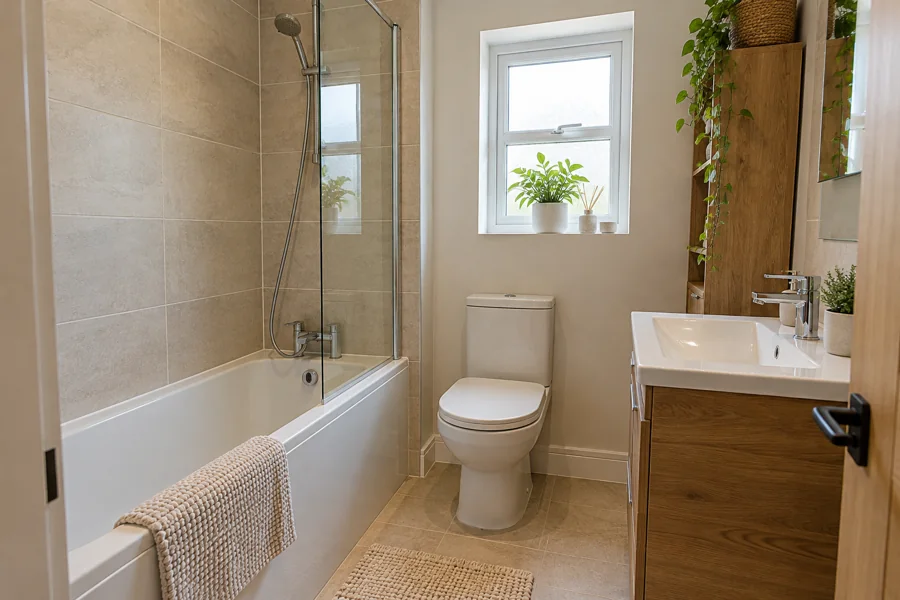
Choose the Details You Like in a Picture
A bathroom picture is useful when you can say what you like about it. It might be the calm colour, the clear floor, the enclosed cupboard or the way the shower screen keeps the room open. Those features can be discussed without copying the photographed room exactly.
Choose a small number of pictures with a clear reason for each. A huge collection can hide your priorities and may include layouts that contradict one another. For your Kilmarnock bathroom, separate the look from the arrangement. We can consider how to create a similar feeling while choosing fittings that suit the real room, rather than squeezing a photographed scheme into dimensions it was never designed for.
Think Through an Ordinary Morning
Think through the bathroom while it is being used. Where do clothes go during a shower? Can someone reach a towel without dripping across the room? Is there a place for a toothbrush and other everyday items without covering the basin? These questions often reveal useful changes that a colour choice will not solve.
Tell us who uses the room and which problems happen regularly. Through our bathroom installation service, we design the layout, supply the chosen fittings and carry out the work. We can compare where storage, the basin and bathing facilities would go after measuring the space. You do not need to plan the pipes yourself: describe what you want to reach or use more comfortably, so the agreed room answers those needs.
Choose the Bath or Shower Early
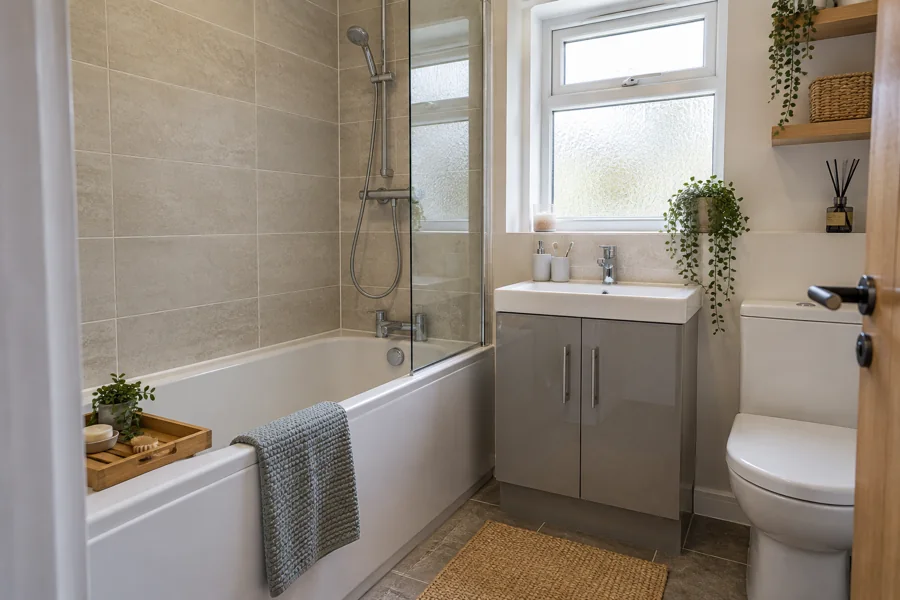
Keeping a bath, replacing it or changing to a shower affects the whole layout. Consider the people who will use the room and whether there is another bath or shower in the home. A shower enclosure should be chosen for its usable entrance and standing area, not just the outside dimensions shown in a brochure.
If you want a shower over a fitted bath, discuss the screen, taps and position of the shower controls together. The arrangement should make sense when entering, washing and cleaning. Do not order those parts separately and hope they fit around one another later. Settling the main bathing arrangement early leaves the remaining space easier to plan for storage and the basin.
Plan Storage for the Items You Use
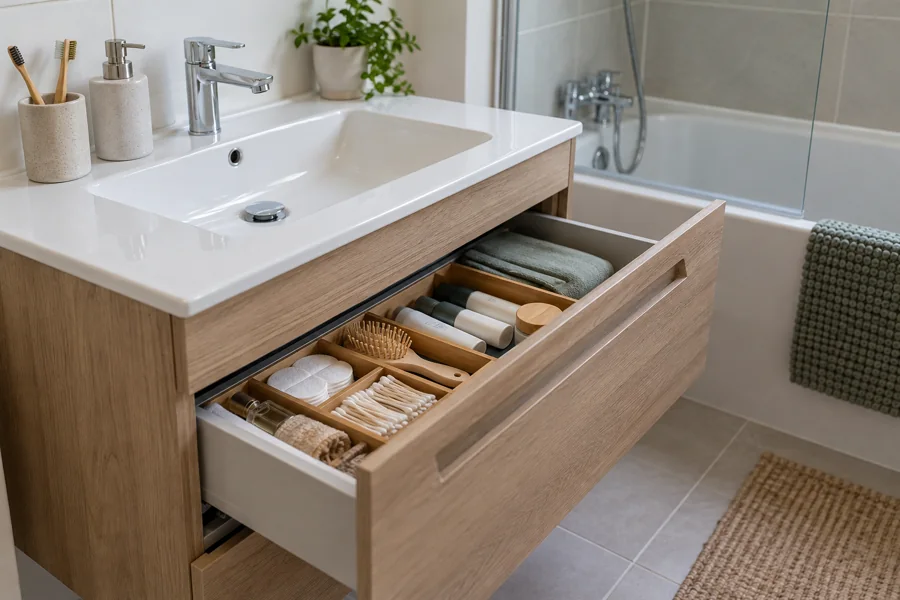
Storage works best when it is planned around actual belongings. A drawer for daily items may be more useful than a tall cupboard that holds things you rarely use. Measure bulky bottles and think about spare towels before choosing a cabinet that looks generous in a photograph but has little useful space inside.
Check how the cupboard opens and whether someone can stand in front of it. A wall cupboard must also sit at a useful height and avoid awkward contact with the person using the basin. Where a recessed shelf is proposed, we need to check that the wall and its waterproofing can take it. Treat it as a planned feature, not an assumed extra that can be cut into any wall.
Bring Your Ideas and Explain Existing Problems
Useful preparation is simple. Make a note of existing problems, save the product pictures you want to discuss and identify anything that must stay. Tell us about a stiff bathroom door, a troublesome shower or a surface that has been getting wet. These observations help focus the discussion without asking you to diagnose the cause.
Mention practical access as well. Stairs, limited parking or a narrow entrance can affect how materials reach the bathroom and how the old suite leaves. If this is your only bathroom, say so at the start. That allows the work and temporary arrangements to be discussed honestly rather than becoming a surprise after the installation has begun.
Check the Product List Before Ordering
Once the layout is agreed, review the products as one room. Check the basin and tap combination, the shower arrangement, mirror position and the finish around the bath or tray. Choosing these in a sensible sequence reduces the chance of one late selection forcing another change.
The bathroom cost guide explains how these choices should appear in an itemised quotation. Keep a record of the accepted versions, including colours and sizes where they matter. Before buying anything independently, discuss who is supplying it and whether it suits the proposed installation. A bargain is less helpful if it arrives with missing parts or dimensions that conflict with the measured plan.
Prepare for Fitting and First Use
Ask what you should clear before fitting and where new products can be kept without blocking the home. Move personal items you still need somewhere accessible and discuss the route for carrying the old suite out. Check when the toilet, basin and bathing facilities are expected to be usable during removal, preparation and fitting, and when new finishes can first be used. Raise any need for alternative facilities before the job starts.
At completion, ask for an explanation of the fitted controls and relevant product care instructions. Find out whom to contact if you notice a problem. Keep product information somewhere accessible, especially if different finishes need different cleaning methods. The aim is a bathroom you can use and look after comfortably, not simply a room that looks finished on the final day.
Plan Your New Bathroom With Us
Tell us which parts of your bathroom work well and what needs changing. We design, supply and fit bathrooms in Kilmarnock, checking your ideas against the room measurements and the installation work needed.